
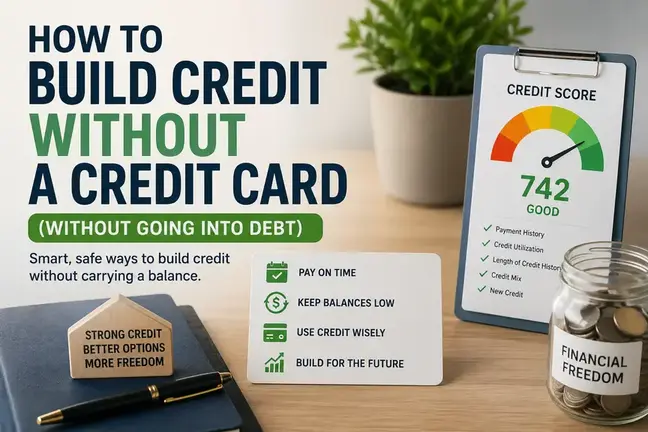
- Why the "carry a balance to build credit" myth is wrong — and what credit scoring models actually reward instead.
- Who gets trapped by this advice most often — and why beginners and people rebuilding after debt are the ones paying interest for a scoring benefit that doesn't exist.
- What the real credit-building factors are — and how to build a strong profile without carrying revolving debt or paying a dollar of interest.
There’s a stubborn piece of advice that keeps getting passed around at family dinners, in office break rooms, and across half the internet: you need to carry a balance on a credit card to build credit. Pay a little interest, the thinking goes, and the credit bureaus will reward you.
It’s wrong — and it’s been costing people money for decades. You can build a strong credit profile without ever paying a dollar of interest, without carrying revolving debt, and in some cases without owning a traditional credit card at all. Credit scoring models look at how responsibly you use credit — not whether you’re in debt to a lender. “Using credit” means having an account in your name and reporting activity to the bureaus. “Carrying debt” means leaving a balance unpaid month to month and accruing interest. Only one of those helps your finances.
Can You Build Credit Without a Credit Card?
Yes — and this is reassuring news for anyone just starting out or rebuilding after a rough stretch. Credit cards are the most common way to build credit, but they’re not the only way. What credit bureaus actually care about is consistent, reported, on-time behavior. The instrument matters less than the pattern.
How Credit Reporting Actually Works
Your credit score isn’t pulled out of thin air. The three major U.S. credit bureaus — Experian, Equifax, and TransUnion — collect data on accounts that lenders, landlords, and certain service providers choose to report. Each reported account shows things like balance, payment history, account age, and credit limit. Scoring models like FICO and VantageScore turn that data into a three-digit number.
The key word is reported. If an account isn’t reported, it doesn’t help your score — no matter how responsibly you pay. That’s why renting an apartment for ten years doesn’t automatically build credit unless your landlord or a rent reporting service shares that history with the bureaus.
Ways to Build Credit Without Traditional Credit Cards
For people trying to avoid revolving balances, safer credit products can offer a more accessible starting point than standard unsecured credit cards:
- Authorized user accounts. A trusted family member or close friend can add you as an authorized user on their credit card. Their payment history and account age may show up on your credit report — you benefit from their track record without being legally responsible for the debt. For it to help, the primary cardholder needs good payment history and low utilization on that account; a maxed-out card with late payments won’t do you any favors. This is one of the most accessible options for rebuilders who can’t get approved on their own, since there’s no application or hard inquiry on your side.
- Rent reporting services. If you pay rent on time, services like Rental Kharma, Rent Reporters, and Experian’s Boom can report that history to one or more credit bureaus — turning a bill you already pay into a credit-building activity. Coverage varies: some services report to only one bureau, others to all three. Costs typically run from free to around $10 per month depending on the service and how far back they report your history. It’s one of the most underused credit-building tools available to renters.
- Credit-builder loans. Designed for people with little or no credit. You make small, fixed payments that get reported, often with the loan amount held in a savings account until the term ends.
- Secured products. Secured cards and credit-builder accounts require a small deposit that acts as your credit limit. Used responsibly, they report just like traditional cards.
Many people avoid building credit altogether because they associate it with overspending, interest charges, or getting trapped in revolving balances. But newer credit-building products are often structured differently. Some are specifically designed for people who want to improve their credit profile while keeping spending controlled and avoiding large unsecured limits.
That makes them especially appealing for:
- beginners
- people rebuilding after debt
- financially cautious users
- anyone trying to improve their score without relying on traditional credit card debt
Why This Matters for Beginners and Rebuilders
These options exist for a reason. A younger adult with no credit history can hit repeated denials applying for unsecured cards. Someone recovering from past debt doesn’t need another high-interest card tempting them back into the same cycle. And if you’re simply financially cautious, these tools let you build a credit profile on your own terms.
Do You Need to Carry a Balance to Build Credit?
No. Let’s settle this clearly: you do not need to carry a balance to build credit. Paying your statement in full every month is, in fact, the ideal way to use a credit card.
Why This Myth Exists
The myth has staying power for a few reasons. First, people misunderstand credit utilization. They hear “low utilization helps your score” and assume that means some utilization is required. The math doesn’t work that way.
Second, people confuse statement balances with carried balances. When your card issuer sends your monthly statement, that statement balance is typically what gets reported to the credit bureaus. If you pay it off after the statement closes, your score still sees that you used the card responsibly.
Third, the advice has been repeated for so long it’s become folklore. But major scoring models, including FICO and those tracked closely by the CFPB, do not reward carrying a balance. The CFPB explicitly notes that you do not need to carry a balance to build credit.
What Actually Helps Your Credit Score
The factors that genuinely move your score:
- On-time payments. The single largest scoring factor in most models.
- Low utilization. Lower balances relative to your credit limits — ideally well under 30%, and better under 10%.
- Account age. The longer you’ve had accounts open in good standing, the better.
Notice that none of the factors above require carrying a balance or paying interest. Credit scoring models reward responsible account management — not ongoing debt.
Why Carrying Debt Can Cost You Money
Choosing to carry a balance for “credit-building purposes” is one of the most expensive mistakes people make. U.S. credit card APRs routinely sit above 20%, so every month you carry a balance, you’re paying real money to chase a benefit that doesn’t exist. Interest compounds, minimum payments stretch payoff out for years, and what started as a “strategy” becomes a long-term drag. (See Why Minimum Payments Don’t Work and Why Credit Card Debt Isn’t Going Down.)
Many people end up paying hundreds or even thousands in unnecessary interest because they mistakenly believe debt itself improves their score. In reality, they’re often paying for a scoring benefit that doesn’t exist.
Build Credit Without Revolving Debt
For people who want to build credit without relying on revolving debt, credit-building programs can offer a safer starting point — designed for beginners and people avoiding traditional credit card debt.
Explore Credit-Building Options →Is It Bad to Pay Off Your Credit Card in Full?
Short answer: no, paying in full is almost always the right move. But some people swear they’ve seen their score drop after doing it — and that confusion is worth addressing.
Why Some People See Temporary Score Drops
A few things can cause short-term fluctuations after a big payoff:
- Utilization changes. If you pay a card to $0 right before the statement closes, your reported utilization for that card drops to zero. Usually fine, though some models slightly prefer some activity on at least one account. Any effect is small and short-lived.
- Closed accounts. Some people pay off a card and then close it. Closing an account can reduce your total available credit and shorten your average account age — both of which can nudge a score down temporarily.
- Normal monthly noise. Credit scores move a few points up and down all the time based on when balances are reported. A small dip after a payoff isn’t a warning sign.
Why Paying in Full Is Better for Long-Term Credit Building
The bigger picture is the one that matters. Paying in full means zero interest, no accumulating revolving debt, and treating the card like a payment tool instead of a loan. Financial stress stays low because you don’t owe money you haven’t yet earned. A few points of short-term score fluctuation after a payoff is normal and not worth chasing.
Focus on Long-Term Credit Health
Credit scores reward patterns, not snapshots. Consistent on-time payments, low utilization, and stable account history will always beat short-term tactics aimed at squeezing out a few extra points.
What Actually Builds Your Credit Score?
FICO and VantageScore, the two main U.S. scoring models, weigh several factors differently. Knowing what they reward takes the mystery out of credit building.
Payment History
This is the heaviest weight in most scoring models, accounting for roughly 35% of a FICO score. Every on-time payment helps; every missed payment, especially one that becomes 30 or more days late, can cause significant damage. Consistency matters more than perfection — and the further a missed payment goes into the past, the less it affects you.
Credit Utilization
Utilization is the second-largest factor at around 30% of a FICO score. It’s your reported balances divided by your total credit limits. Lower is better. A common guideline is to keep utilization under 30%, but people with excellent credit often keep theirs in single digits — Experian notes that those with the highest scores typically carry utilization well below 10%. Utilization is recalculated every month, making it one of the fastest levers you can pull. (See What Is Credit Utilization.)
Length of Credit History
Roughly 15% of your score reflects how long you’ve had credit — the age of your oldest account, your newest, and the average across all accounts. This is why closing your oldest credit card can sometimes hurt: it eventually shortens your credit history once the closed account drops off your report.
Credit Mix and New Credit
The remaining 20% or so is split between credit mix (the variety of account types) and new credit (how recently you’ve applied). Hard inquiries cause small, temporary dips. Opening too many accounts in a short window compounds those dips, but a single inquiry here and there isn’t anything to worry about.
How Long Does It Take to Build Credit?
This is one of the most common questions from people just starting out. The honest answer: it depends on where you’re starting, but progress can come faster than most people expect.
How Quickly Credit Scores Can Change
With no credit history at all, you typically need at least one account that’s been open and reporting for about six months before a FICO score can be generated. Once that first score lands, meaningful improvements can show up within months as on-time payments stack up.
If you already have some credit history, changes often appear in your next reporting cycle — typically within 30 to 45 days of paying down a balance or making a positive shift.
That early reporting window is one reason many beginners choose structured credit-building products — they create consistent reporting activity while keeping balances and spending controlled.
What Slows Down Credit Building
A few common mistakes stall progress: missed or late payments, which hit hard and stay on your report for up to seven years; high utilization, especially balances close to your limit; and frequent hard inquiries, which signal you may be over-applying.
Why Consistency Matters More Than Speed
There’s no shortcut to a strong credit profile, and no reason to feel stuck either. Steady, boring behavior — paying on time, keeping balances low, leaving older accounts open — does the work over time. A year of clean behavior changes things. Three years changes them a lot.
The earlier you start building positive payment history, the more time your credit profile has to mature. Even small, consistent activity reported over time can make a meaningful difference when applying for apartments, loans, or future financial products.
Best Ways to Build Credit Responsibly
If you’re starting from scratch or rebuilding, the path forward is straightforward — and none of these steps require taking on debt.
Make Every Payment on Time
Set up autopay for at least the minimum on every account, even if you plan to pay the full balance manually. Autopay is a safety net — it ensures a bad week or a forgotten due date doesn’t turn into a missed payment that lingers for years.
Keep Your Utilization Low
Whether you’re using a traditional credit card or a secured credit-building account, keep reported balances well below 30% of your available limit, and aim for single digits if you can. Paying balances down before the statement closes lowers the utilization that gets reported — a simple habit that’s central to any controlled credit-building approach.
Avoid Unnecessary Debt
Use credit lightly and pay it off in full each month. Carrying a balance doesn’t improve your score — it just adds interest charges on top of nothing. The smartest credit builders treat their card as a payment tool, not a loan, and let consistent on-time payments do the work over time.
Use Credit-Building Tools Carefully
If you want a safer credit-building approach — especially without the temptation of a high-limit unsecured card — controlled credit accounts and non-revolving options are worth considering. Secured cards, credit-builder accounts, and similar non-revolving credit-building options keep your spending controlled and your payments reportable, without exposing you to runaway balances or steep interest.
For many people, the hardest part isn’t understanding how credit works — it’s finding a way to build credit without falling into unhealthy debt habits. That’s why many newer credit-building tools focus on defined spending limits, predictable payments, and consistent reporting instead of encouraging long-term revolving balances.
Build Credit Without Relying on Traditional Credit Card Debt
These products are often designed specifically for beginners with limited credit history, people rebuilding after debt, and financially cautious borrowers trying to avoid revolving balances.
Explore Credit-Building Options →When Building Credit Without Debt Makes the Most Sense
People New to Credit
Students, young adults, and first-time borrowers benefit most from low-risk credit-building tools. Starting with a secured product or as an authorized user creates history without the steep learning curve — and steep costs — of a traditional high-limit card.
People Recovering From Debt Problems
If you’ve recently paid off credit card debt or come through a bankruptcy or collections situation, the last thing you need is another revolving account that recreates the cycle. Credit-builder loans, secured accounts, and rent reporting let you rebuild without putting yourself near the temptation that caused trouble before.
For many people rebuilding after debt, the goal isn’t just improving a score — it’s rebuilding confidence around credit itself.
Financially Cautious Users
Some people prefer a more controlled way to build credit than managing a traditional unsecured credit card. That’s one reason credit-building products and secured tools have become increasingly popular among beginners and people rebuilding after past debt problems. Building credit through non-revolving tools means you can still qualify for an apartment, a car loan, or a mortgage later — without the risk of runaway balances or steep interest charges.
Final Thoughts
You Do Not Need Debt to Build Credit
The single biggest myth in personal finance is also one of the most expensive. Building credit is about using credit responsibly — making on-time payments, keeping balances low, and letting your history grow. None of that requires carrying a balance or paying a single dollar of interest.
Focus on Long-Term Financial Stability
The strongest credit profiles are built on boring habits: pay on time, keep utilization low, leave older accounts open, and avoid applying for credit you don’t need. Do that consistently, and your score will reflect it — and more importantly, so will your financial life. For the bigger picture, Pay Off Debt vs Investing is a useful next read, alongside What Is Credit Utilization and Improve Your Credit Score Fast.
If your goal is to improve your credit while avoiding the stress and cost of carrying balances, starter credit products can provide a lower-risk entry point than traditional unsecured credit cards.
A Safer Way to Build Credit
Explore a safer way to build credit without relying on revolving debt or paying unnecessary interest.
Explore Credit-Building Options →